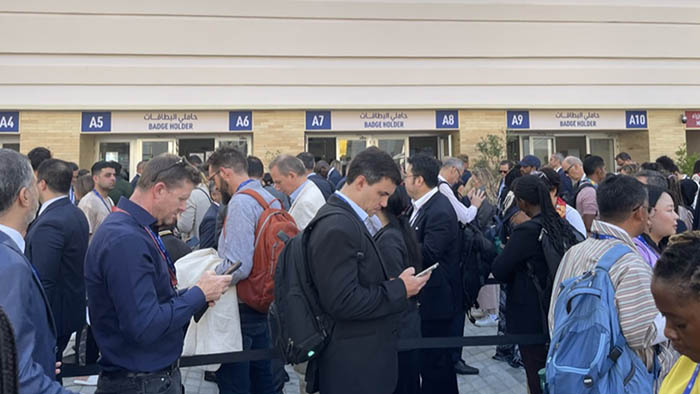
The bomb damage from Al Jaber’s “no science” claim yesterday was invisible upon arrival at COP this morning. The lines snaking from the metro lasted for hours. It works spectacularly but was overflowing with the nearly 100,000 people flooding into COP Day 5. Every morning panel featured empty seats, as the cream of the world’s climate scientists, energy experts, change agents and yes, even negotiators, stood out in the blazing sun, plodding like cattle through chacons inching toward security and badge check to get inside, while protestors sought to remind the parties why they were there in the first place. Not exactly a promising...

Dispatches from COP28: Negotiating doomsday
Hunter Lovins live from Dubai — Delegates now must decide the fate of the earth I’m losing total track of what day it is, what month it is: Why are Christmas decorations being hung in the hotel? Oh, right. It is December. COPs usually happen in November. Pouring too much hot water into my instant oatmeal, bleary-eyed from nowhere near enough sleep. Right, it’s not tea. OK, we’ll sip the porridge. What we call in the mounted search and rescue the “ROW” (rest of the world) or rescuing people with horses, seems a dimly remembered hometown fantasy, until I get an email from...

Dispatches from the front lines of COP28: “What a shit show”
COP Prez Al Jaber’s temper tantrum over Mary Robinson. Protests planned Originally published by Climate and Capital Media. Our correspondent, Hunter Lovins, will be offering her insights as COP unfolds. Her first report: Dubai — Week one of the UN’s Conference of the Parties (COP) climate extravaganza, and nothing is working. There’s a poll going around among the “pavilion holders” (the non-profit organizations that have paid tens to hundreds of thousands of dollars to rent space to showcase their efforts to implement solutions to the climate crisis) asking whether or not this COP is worse than the shit show in...
![Lyons Climate Action Group – Hunter Lovins [2022.08.11]](https://natcapsolutions.org/wp-content/uploads/2022/08/HunterLovinsLyons-WEB.jpg "HunterLovinsLyons WEB")